Trailer | The 3 Minute Pause with Muneeza Khimji
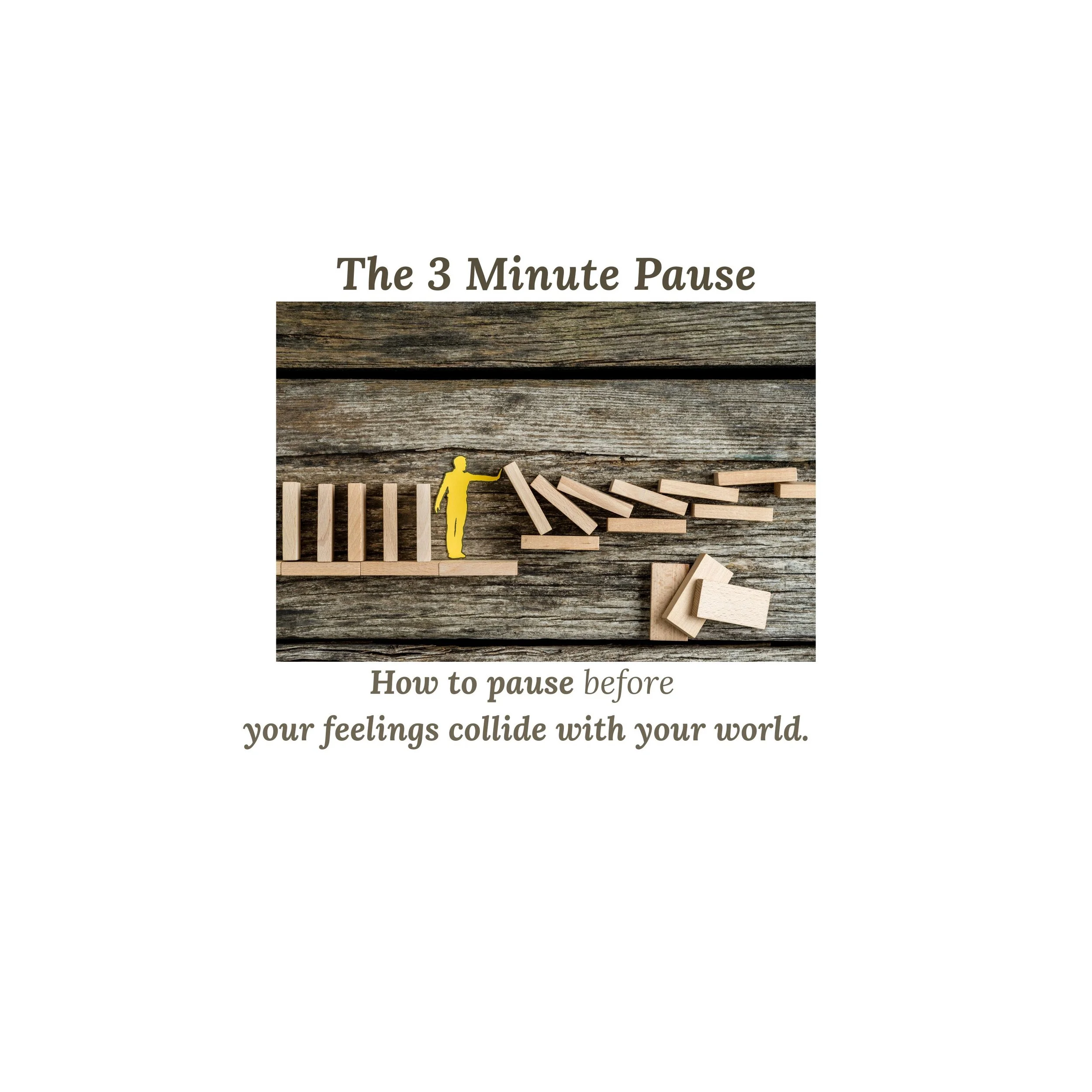
What is The 3 Minute Pause and why does it matter? In this short trailer, Muneeza Khimji shares the heart behind a nervous system regulation podcast built around one intentional 3 minute pause you can practice in real life.
What if just 3 minutes could change how you react in the moments that matter most?
This podcast is for you if you struggle with emotional reactions, overthinking, or feeling overwhelmed—and want simple, practical tools to regulate your nervous system and respond differently in real time.
In this short trailer, Muneeza Khimji, Psychotherapist and Somatic coach, shares the heart of the show: a grounded, no-hype space to explore self-regulation, mindfulness, and nervous system awareness through practical, real-life pauses.
Each bite-sized episode centers around one intentional 3-minute practice you can use when it actually counts, in moments of stress, reactivity, overthinking, or emotional overwhelm.
Because regulation builds resilience. And one pause can change everything.
→ Download the free 3 Minute Reset Journal: muneezakhimji.com/3minuteresetjournal
Episode 0 | You Can’t Say No—Even When You Want To
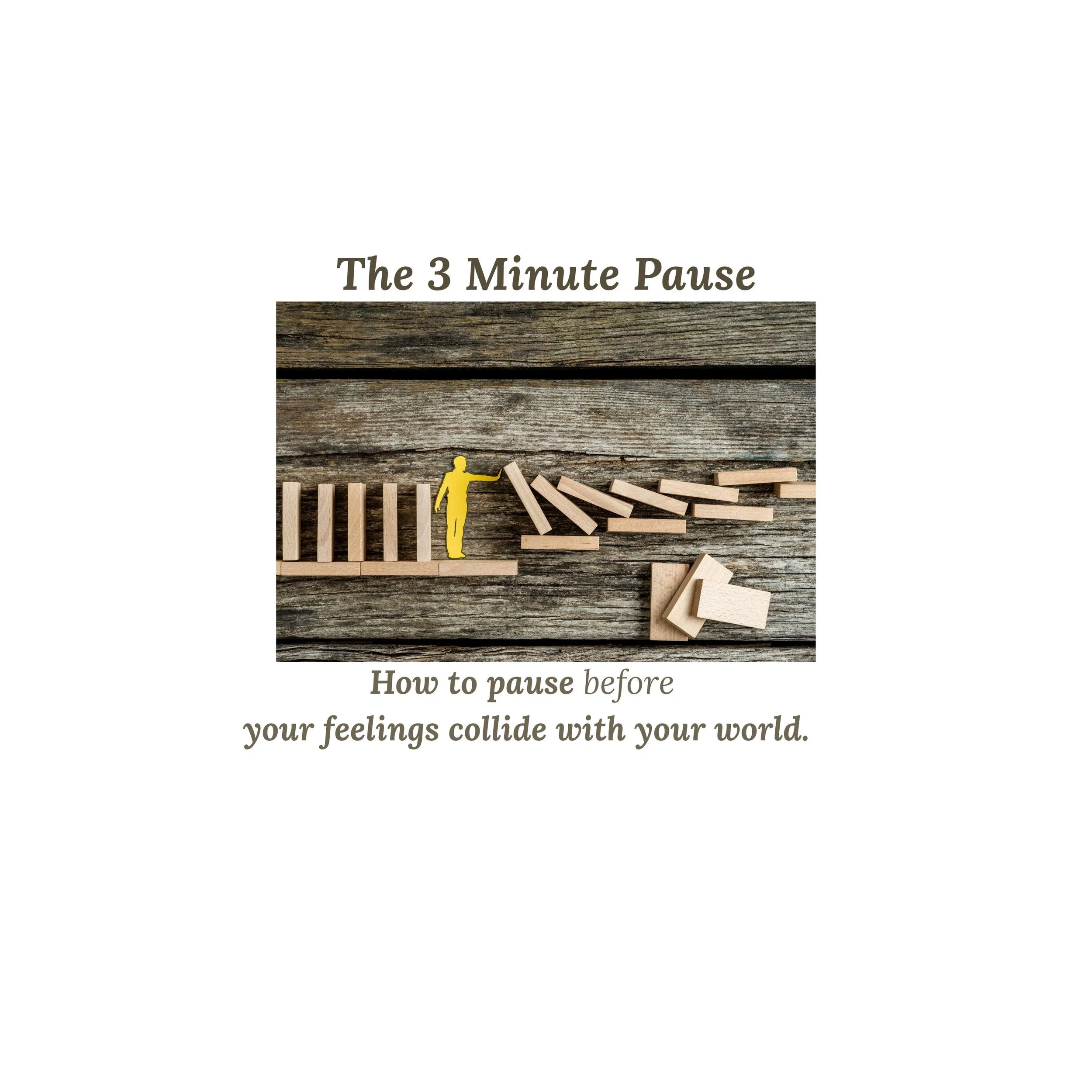
What if the reason you keep saying yes isn’t kindness — but fear? In this opening episode of The 3 Minute Pause, we explore how fear of discomfort shapes your choices, fuels people-pleasing, and keeps you reacting on autopilot.
Episode Summary
You were going to say no… so why didn’t you?”
You tell yourself it’s easier to just say yes—but underneath, you’re people-pleasing, afraid of disappointing others, and quietly struggling to set boundaries and say no.
This podcast is about learning to become comfortable with those feelings that make you uncomfortable, so you can learn to say no.
Because the feelings you avoid do not disappear. They decide for you.
From the small decisions, like saying yes to dinner when you are exhausted, to the bigger ones, fear has a subtle way of sliding into your DMs and calling the shots.
We begin to notice that split second, the finger hovering over “Yes,” the tightening in your chest, the urge to keep the peace. That tiny moment before you react.
The pause is where everything changes.
It is the space between what you are wired to do and what you consciously choose to do. In that heartbeat, awareness becomes choice.
Each week, you will get one small, repeatable pause. Something simple, practical, and powerful enough to use when it actually matters. Just 3 intentional minutes. Enough for your nervous system to begin rewiring itself.
In This Episode, We Cover:
Why we say yes when we want to say no
How fear of disappointing others shapes everyday decisions
Emotional avoidance and automatic nervous system responses
The “finger-hovering” moment before you react
How 3 intentional minutes can begin to shift old patterns
The Invitation
This week, simply notice how often fear shows up and how much control you give it without even realising it.
The goal is not to fix anything.
It is to pause long enough to see it.
That is where change begins.
Links & Resources
✨ Download the free 3-Minute Reset Journal:
www.muneezakhimji.com/3minuteresetjournal
Episode 1 | That Email Hit Harder Than It Should Have
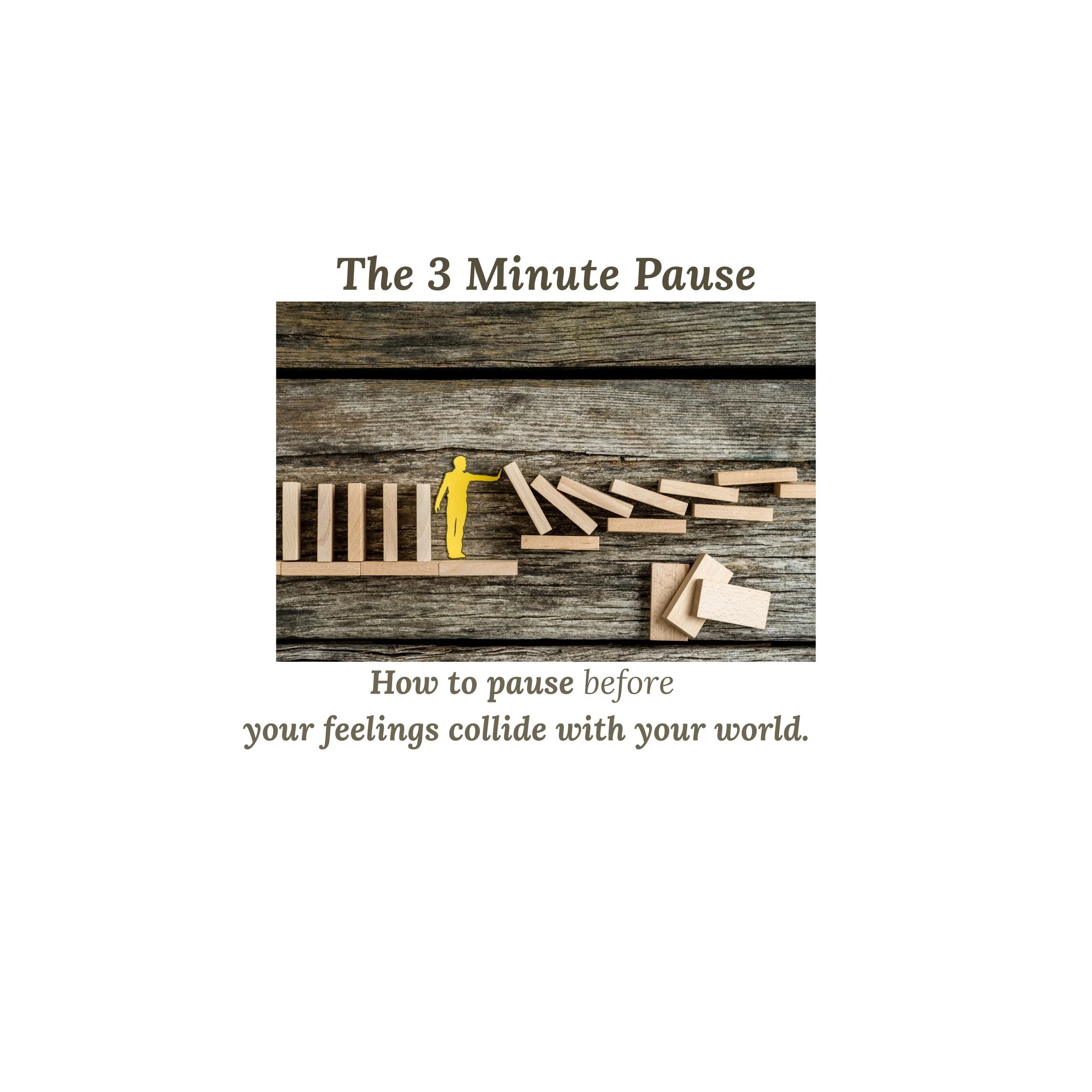
Why do certain emails or conversations at work feel disproportionately intense? This episode breaks down how workplace triggers activate your nervous system — and how a 3 minute pause creates space between reaction and response.
Episode Summary
It was just an email… so why did it feel like so much?
You tell yourself it’s not a big deal—but your nervous system reacts instantly when you’re triggered, leaving you stressed, defensive, and caught in emotional responses you can’t control.
When an email lands or feedback hits a nerve, your nervous system responds before your thinking brain has time to interpret the situation. The tightening in your chest, the sudden defensiveness, the urge to shut down or over-explain are not random. They are automatic.
Your body reacts first. Your thoughts catch up second.
We look at how past experiences shape those fast reactions, why certain situations feel disproportionately overwhelming, and how fight, flight, freeze, and fawn can show up in professional settings without you consciously choosing them.
Most importantly, this episode helps you understand that your reaction is not a personal failure. It is a nervous system response. And when you recognise that, you can create space to interrupt the pattern and strengthen your emotional regulation in the moment.
That is where the 3 minute pause becomes powerful.
In This Episode, We Cover:
•Why your nervous system reacts before your thoughts
• How workplace triggers activate old survival patterns
• What fight, flight, freeze, and fawn look like professionally
• Why some emails or conversations feel bigger than they logically are
• How a 3 minute pause creates space between trigger and response
The Invitation
The next time you feel triggered at work, pause for 3 minutes.
In those 3 minutes, use the Feelings Wheel to identify what you’re actually feeling.
The pause is the practice.
Links & Resources
• Feelings Wheel — If you’re not familiar with it, type “feelings wheel” into your search engine. There are many versions available, and you can choose one that resonates with you.
• Download the free 3 Minute Reset Journal: www.muneezakhimji.com/3minuteresetjournal
Episode 2 | Why Small Things Trigger Big Fights
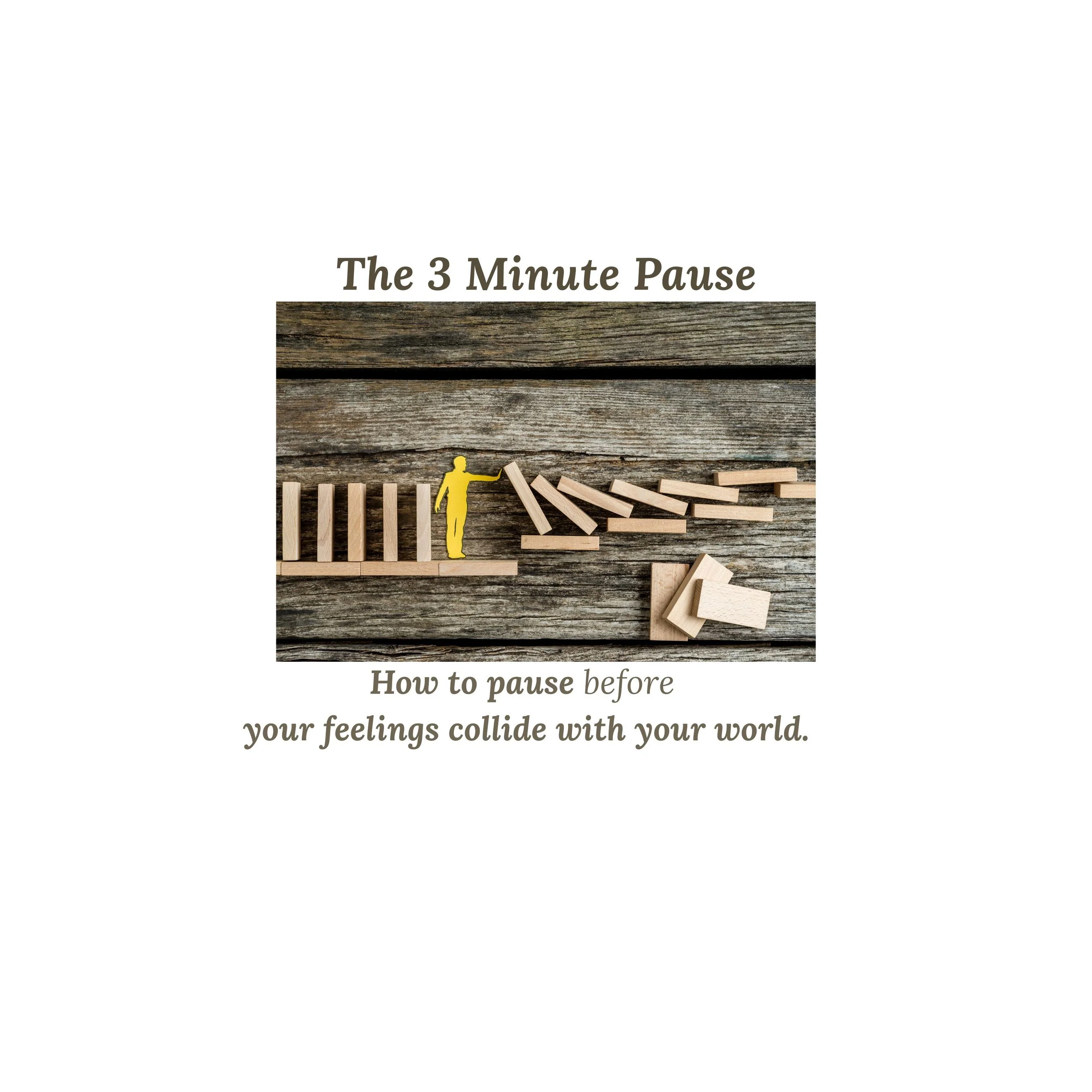
Why do small things trigger conflict in relationships? In this episode, we unpack the real fear behind “I want you to want to” and explore how ordinary moments quietly activate old patterns in your nervous system, turning everyday resentment into something that feels far bigger than it is.
Episode Summary
I want you to want to”… so why does it hurt this much?
You tell yourself it’s just a small thing—but the way your partner responds triggers something in you, and suddenly a small moment in your relationship turns into a much bigger emotional reaction.
It sounds small. Almost petty. Like it’s about dishes, laundry, or the way someone sighs when you ask for help.
But in this episode, we unpack why those ordinary moments can feel emotionally enormous.
Because when your partner does something “to help” but not with enthusiasm, it can land as something much deeper than inconvenience. It can register as abandonment. As being unseen. As being alone inside your own relationship.
We explore how everyday resentment in relationships — and the relationship triggers hiding underneath it — are often a disguise for a much older fear, the fear that no one will show up for you unless you manage everything yourself.
You’ll hear why turning chores into emotional scorecards creates more distance, not more connection, and how using someone else’s enthusiasm as proof of love keeps you dysregulated and your nervous system on alert inside your relationship.
Most importantly, this episode invites you to stop outsourcing your emotional safety.
Because the dishwasher is not the problem.
The fear underneath it is.
In This Episode, We Cover:
• Why small relationship moments trigger disproportionately big reactions
• What “I want you to want to” is really communicating
• How fear of being alone hides underneath everyday irritation
• Why rescuing is not the same as loving
• How to meet the fear directly instead of spiralling into resentment
The Invitation
The next time something small feels huge, pause.
Notice the fear underneath the irritation.
In that moment, acknowledge it.
Say, “Hello. I see you.”
Do not run from it.
Do not outsource it.
Meet it.
Because once you sit with the real emotion, the argument loses its power.
Work With Muneeza
If this episode resonated and you’re ready to explore it in a supported space, you can learn more about working with me here:
Episode 3 | How Your Child’s Emotions Trigger You
Why do your child’s emotions feel like they hijack your nervous system? In this episode, we explore co-regulation in parenting and what it really means to support your child — or your person — without absorbing their emotional state.
Episode Summary
It’s not just your child reacting—you are too.
You tell yourself you should be able to stay calm—but your child’s emotions trigger your own nervous system, and suddenly you’re both caught in the same reaction.
You moved from calm to braced in seconds and it can feel like your child’s emotional dysregulation has hijacked your nervous system.
In this episode, we explore why that happens.
Through a real parenting experience, I share what it looks like when a child moves through anger, overwhelm, and emotional explosions — and what happens inside you as the parent. We look at why dysregulation feels contagious, how proximity amplifies emotion, and why trying more tools isn’t always the answer.
What ultimately helped was containment.
Not fixing.
Not reasoning.
Not absorbing.
Creating space that allowed my child to regulate herself — and allowed my nervous system to settle too.
While this shows up most clearly in parenting, the same dynamic exists with your partner or anyone you live closely with. When someone you love is dysregulated, your nervous system responds. The work is learning how to support them without carrying what isn’t yours.
This episode is about emotional boundaries, nervous system regulation, and true co-regulation in close relationships.
In This Episode, We Cover:
• Why your child’s emotions trigger your nervous system
• Emotional dysregulation in children and how it affects parents
• Why big emotions can feel contagious inside a home
• The difference between co-regulation and over-absorbing
• What containment actually looks like in parenting
• How to stay calm when your child is overwhelmed
The Invitation
This week, when your child has big emotions, create containment.
Stay present.
Hold the boundary.
Do not escalate.
Let the emotion exist without trying to remove it.
Allow your child to regulate — while you stay anchored in your own nervous system.
Notice how this same principle applies with your person, too.
That is co-regulation.
Download the Free 3 Minute Reset Journal
Episode 4 | Panic or Growth?
Feeling stuck during a life transition? This episode explores how anxiety and nervous system activation can blur the line between panic-driven decisions and real personal growth — and how to navigate change without rushing into reinvention.
Episode Summary
Nothing’s wrong—but something feels off.
You tell yourself something needs to change—but underneath it, you feel anxious and uncertain, and being stuck like this makes it hard to know whether you’re growing or just overwhelmed.
You’re not in crisis.
You’re not falling apart.
But you feel stuck. Restless. Like something should be happening — and it’s not.
So you start thinking maybe you need to change something.
Not one small thing.
Everything.
New job. New city. New version of you.
And it feels exciting for a minute. Productive. Empowering, even.
But what if that urgency isn’t purpose?
What if it’s panic?
In this episode, we’re talking about what really happens in your nervous system during a life transition — especially when you’re in that in-between space of who you were and who you’re becoming.
Because feeling stuck in a life transition can trigger anxiety in ways that don’t look dramatic. It can look like over-functioning. Like reorganizing your entire life at 10 p.m. Like rewriting a CV you’re not even sure you want to send. Like convincing yourself that momentum equals growth.
Sometimes it does.
Sometimes it doesn’t.
Real growth tends to feel steady. It doesn’t scream. It doesn’t rush you. It doesn’t demand that you reinvent yourself overnight.
Panic, on the other hand, feels urgent. Loud. Time-sensitive. Like if you don’t act right now, you’ll miss your one shot at a better life.
And the tricky part?
They can feel almost identical in your body.
This episode will help you slow that down. So you can tell the difference between panic-driven change and aligned, grounded growth — and stay inside transition long enough to let it actually shape you.
In This Episode, We Cover:
• Why feeling stuck in a life transition can trigger anxiety
• How urgency can disguise itself as purpose
• The difference between panic-driven decisions and real personal growth
• Why productivity can temporarily soothe your nervous system
• How to recognize when you’re acting from alignment instead of fear
The Invitation
This week, before you make a big move, pause.
When you feel the urge to change everything, ask yourself:
Is this coming from calm… or from panic?
If I don’t do this, will I feel disappointed — or relieved?
You don’t need perfect clarity.
You just need enough awareness to notice what’s driving you.
Because when you stop rushing to move, you can finally hear the difference between urgency and alignment.
And that — not the plan, not the reinvention, not the spreadsheet — is what actually changes everything.
Work With Muneeza
If you’re in a season of transition and you can feel the pull to make a big move — but you don’t want that move to come from panic — this is the kind of work we do together.
Coaching is a space to slow it down.
To separate urgency from alignment.
To make decisions from steadiness instead of fear.
If you’d like support navigating this chapter without rushing yourself through it, you can learn more about working with me here:
muneezakhimji.com/work-with-me
Episode 5 | Small Changes Shouldn’t Feel This Big
Why does losing your daily routine trigger anxiety? In this episode of The 3 Minute Pause, we explore how small rituals regulate your nervous system, why change can feel unsettling, and how learning to feel your emotions — while soothing yourself — builds real emotional resilience.
Episode Summary
It’s not the change—it’s what it takes from you.
You tell yourself it’s just a small change—but even small changes in your routine can trigger anxiety and make you feel more out of control than you expect.
The morning coffee.
The afternoon cup of tea.
The glass of wine that signals the day is done.
The walk that helps you reset before the evening begins.
From the outside, they look ordinary.
But those small rituals often carry more weight than we realise.
Because they don’t just structure our day — they help regulate our nervous system. They create moments of familiarity and steadiness that allow us to move through life without being overwhelmed by everything we feel underneath.
Most of the time, we don’t even notice how much we rely on them.
Until something changes.
When things change, the nervous system suddenly loses the pattern it depended on. The emotions that ritual helped soften can rise quickly to the surface.
And that’s often when anxiety appears.
In this episode, we explore why change can feel so unsettling and what’s actually happening in your nervous system when those familiar anchors shift or disappear.
Because the rituals themselves aren’t the problem.
But if they become the only way we soothe ourselves, we never learn how to stay with the feelings underneath them.
And when life changes — as it inevitably does — those feelings can suddenly feel overwhelming.
This episode invites you to begin building the capacity to feel and soothe at the same time, so that your steadiness doesn’t depend entirely on the ritual itself.
In This Episode, We Cover:
• Why small daily rituals help regulate your nervous system
• Why change can trigger anxiety
• How habits quietly help us cope with difficult emotions
• Why change can feel overwhelming when routines shift
• How learning to feel discomfort builds emotional resilience
The Invitation
This week, try something different.
Have the ritual that usually helps you settle — and feel at the same time.
Notice what’s happening inside you while you’re doing it.
The sadness.
The uncertainty.
The discomfort the ritual usually softens.
Just stay with the feeling for a few minutes while the ritual is happening.
Because learning to feel and soothe at the same time is what makes you steadier when the ritual isn’t there.
Work With Muneeza
If you’re learning to navigate difficult emotions instead of avoiding them — especially during seasons of change — this is the kind of work we explore together.
Coaching creates space to slow down your reactions, understand your nervous system, and build the capacity to meet life with more steadiness and awareness.
If you’d like support developing that resilience, you can learn more about working with me here:
Episode 6 | It’s Not FOMO—It’s the Fear of Being Forgotten
Feeling the constant need to show up for others—even at your own expense? This episode explores the fear of being forgotten, people-pleasing patterns, and relationship anxiety, helping you understand why you overextend yourself and how to pause before reacting.
Episode Summary
You call it loyalty—but it’s actually fear.
You tell yourself you just care—but underneath it, people-pleasing, fear of being forgotten, and anxiety about losing connection keep you showing up even when it costs you.
In this episode, we’re unpacking the emotional and nervous system patterns behind the constant urge to show up for others—even when it means ignoring your own needs.
Because what looks like care, reliability, or being “the dependable one” can often be driven by anxiety, people-pleasing patterns, or a fear of losing connection.
If you’ve ever felt anxious when you couldn’t be there for someone…
rearranged your life to avoid disappointing others…
or struggled to prioritize your own needs without guilt…
this episode will help you understand why.
We’ll explore how fear of abandonment, people pleasing, and relationship anxiety show up in everyday decisions—and how to tell the difference between genuine connection and self-abandonment.
You’ll also learn a simple, practical pause to help you stop reacting from urgency and start making grounded, aligned choices.
In This Episode, We Cover:
• Why the urge to always show up can be rooted in fear, not just care
• How people-pleasing patterns show up in relationships
• The connection between anxiety and overextending yourself
• Why your nervous system creates urgency to maintain connection
• The hidden belief that being needed equals being valued
• How to recognize when you’re abandoning your own needs
• A simple pause to help you respond instead of reacting
The Invitation
This week, when you feel that urgency rise—the pull to go, fix, show up, or rearrange everything—pause.
Notice the feeling in your body.
Notice the action you feel compelled to take.
And ask yourself:
If I do this… what need am I ignoring right now?
Keep it simple.
Is it rest?
Food?
Space?
A moment to breathe?
Meet that need first.
Then, once the intensity settles, come back and choose.
Not from panic.
Not from fear.
But from a place where you’re still with yourself.
Because showing up for others shouldn’t require leaving yourself behind.
Work With Muneeza
If this episode resonated and you’re starting to notice how often you override your own needs to maintain connection, this is exactly the kind of work we can explore together.
Coaching is a space to slow these patterns down, understand where they come from, and learn how to stay connected to yourself while staying connected to others.
If you’d like support navigating this, you can learn more here:
Episode 7 | You Can’t Back Down — Here’s Why
Why arguments escalate so quickly in relationships—and why it feels impossible to back down once you’re triggered. This episode breaks down what’s really happening underneath conflict and how to stop getting pulled into the cycle.
Episode Summary
It was just a conversation—until it wasn’t.
You tell yourself it’s just a conversation—but when something gets triggered in your relationship, it escalates fast, and suddenly you can’t back down.
When something gets triggered in your relationship,
before you even realise it, you’re in an argument.
Your chest tightens.
Your thoughts speed up.
And all you can think is: I need you to get it.
It’s no longer just a conversation.
It’s something else entirely.
You explain yourself again.
And again.
And somehow, it keeps escalating.
So you push harder.
Because if they could just understand what this feels like for you… they would stop.
But they don’t.
And now you’re stuck in a moment that feels impossible to step out of.
In this episode, we’re unpacking what’s actually happening in that exact moment — when an argument escalates and you feel like you can’t back down.
Because this isn’t just about communication.
It’s about what gets activated underneath it.
That urgency you feel?
That need to stay in it, to push, to make them understand?
It’s not random.
It’s your nervous system trying to resolve something that feels unbearable.
And the more intense it feels, the harder it becomes to stop.
We’ll explore how emotional triggers turn conversations into conflict, why arguments escalate so quickly in relationships, and what’s really driving that feeling of “I can’t stop.”
You’ll also learn how to recognize this pattern in real time — and begin to interrupt it before it takes over.
In This Episode, We Cover:
• Why arguments escalate so quickly in relationships
• What happens in your body when conflict intensifies
• The real reason you can’t back down once you’re triggered
• How emotional triggers override communication
• Why trying to “make them understand” keeps the cycle going
• The underlying pattern that repeats across different relationships
• How to recognize escalation as it’s happening
The Invitation
This week, when you’re in that moment—
when you feel that urgency, that need to take back power—
Pause.
Go and sit with your inner child.
Even if you don’t know what that looks like.
Find a photo of yourself as a child.
Sit with it.
Just sit.
3 minutes.
Nothing else.
And if you can, in your mind, hug that child.
Because that moment of connection changes how you show up next.
Work With Muneeza
If you’re starting to notice how quickly conflict escalates in your relationships — and how hard it feels to step out of those moments — this is exactly the work we can explore together.
Coaching is a space to slow these patterns down in real time.
To understand what’s getting activated underneath the argument.
And to learn how to stay connected to yourself, even when things feel intense.
If you’d like support breaking out of these cycles and changing how you show up in conflict, you can learn more about working with me here:
Episode 8 | I’ll show up when I’m ready
Why you avoid conflict and shut down in hard conversations. Learn how emotional avoidance shows up in relationships and how to stay present instead of pulling away.
Episode Summary
You tell yourself you’ll deal with it later.
When you’re calmer.
More clear.
More ready.
But what if avoiding conflict with your partner isn’t about timing…
what if it’s actually about leaving yourself?
In this episode, we’re unpacking the real-time moment you feel the urge to pull away—the tight chest, the shallow breath, the quiet justification that sounds reasonable enough to follow.
Because avoiding conflict doesn’t always look like walking away.
Sometimes it sounds like:
“I’ll do it when I’m ready.”
“I just need space to figure this out.”
“This doesn’t feel right, so I’m out.”
And while it feels like self-protection, it often keeps you stuck in the same patterns, the same reactions, and the same unresolved moments.
If you’ve ever found yourself shutting down in conversations…
pulling away when things feel too intense…
or waiting until you feel “better” before showing up…
this episode will help you understand why.
We’ll explore how emotional avoidance shows up in everyday interactions, why your nervous system pushes you to leave, and what it actually looks like to stay—even when it feels uncomfortable.
You’ll also learn a simple, real-time way to catch yourself in the moment and choose something different.
In This Episode, We Cover:
• Why avoiding conflict is often a form of self-abandonment
• The internal dialogue that signals you’re about to leave
• How emotional avoidance shows up in conversations
• Why “I’ll deal with it later” keeps you stuck
• The difference between leaving and staying in real time
• What it actually looks like to stay when your body wants out
• How small moments of staying begin to change your patterns
The Invitation
This week, when you feel that moment—the tightening, the urge to pull away, the thought that says “not now”—pause.
Notice what you’re telling yourself.
Notice what your body wants to do.
And instead of leaving immediately…
Stay.
Not to fix it.
Not to do it perfectly.
Not to feel calm.
Just to see what happens when you don’t disappear.
Even if it’s only for a moment longer than you usually would.
Because change doesn’t happen when you leave.
It happens in the moment you stay.
Work With Muneeza
If this episode resonated and you’re starting to notice how often you leave yourself in moments of discomfort or conflict, this is exactly the work we can explore together.
Coaching is a space to slow these moments down, understand what’s happening in real time, and learn how to stay—with yourself and in your relationships—without shutting down or pulling away.
If you’d like support with this, you can learn more here:
Episode 9 | Your Body Remembers Everything
Nothing is wrong—so why can’t you settle? If you’re constantly reaching for your phone, distractions, or something to “take the edge off,” your nervous system might be dysregulated without you realizing it. In this episode, we unpack why this happens, how past experiences shape your reactions, and how to catch the moment before you escape it—so you can finally break the pattern.
Episode Summary
You reach for something to take the edge off—without even thinking.
Not because anything is wrong, but because something doesn’t feel fully settled either.
You tell yourself it’s nothing—but your nervous system is holding onto stress, and reaching for distraction becomes an automatic response.
In this episode, we’re slowing down the moment most people miss: the space just before you distract, soothe, or shift out of what you’re feeling.
Because dysregulation isn’t just something that shows up when life feels overwhelming. It’s often much quieter than that. It lives in your habits, your reactions, and the subtle ways you move away from discomfort before you’ve even named it.
And underneath all of it, your nervous system is doing its job—trying to keep you safe.
The problem is, it’s often working from past experiences, not just present ones.
This episode will help you understand why your reactions feel so immediate, why certain patterns repeat, and how to start recognizing the difference between true safety and familiar coping.
In This Episode, We Cover:
• Why dysregulation isn’t always obvious—and how it shows up in everyday habits
• How your nervous system responds to past and present experiences at the same time
• Why certain thoughts make emotions feel more intense and harder to stay with
• How distraction becomes an automatic (not conscious) response
• The hidden “safety stories” that shape your behavior
• Why familiar coping patterns can keep you stuck, even when you’ve outgrown them
• Why control is often a response to feeling unsafe—not a flaw
The Invitation
So this week, notice your regulation rituals
Notice which ones are true safety… and which ones are the memory of it
When you feel that tightening — that urge to fix, soothe, or run — pause for one breath and ask:
“What part of me is trying to feel safe right now?”
Just notice.
Because that single moment — the space between doing and choosing —
is where regulation really begins.
Work With Muneeza
If you’re starting to notice these patterns in your own life—the quick reactions, the urge to move away from what you feel, the pull toward control or distraction—this is exactly the kind of work we explore together.
Coaching gives you the space to slow things down, understand what your nervous system is responding to, and begin creating a sense of safety that isn’t built on old patterns.
If you’re ready to move through this work with support, you can learn more here:
Episode 10 | I Promised I’d Never Be This Parent
Have you ever found yourself reacting in a moment with your child in a way that doesn’t feel like you—and then sitting in the aftermath wondering, “what just happened?”
In this episode, we explore why parenting moments can feel so overwhelming, what’s really happening in your nervous system when you feel triggered, and why reactions like yelling or losing control aren’t actually about your child. You’ll begin to understand what’s underneath these patterns—and how to start shifting them, one 3 minute pause at a time.
Episode Summary
You said you’d never be this parent—and somehow, you are.
This is what reactive parenting and emotional triggers actually feel like—when you’re in it, reacting, yelling, and wishing you could stop.
It feels like watching something unfold in real time, completely out of your control.
And then it hits:
I promised I would never be this parent.
In this episode, we’re talking about reactive parenting, emotional triggers, and why those moments feel so overwhelming and impossible to stop.
Because what’s happening in those moments isn’t just about your child.
It’s something deeper. Faster. Already in motion.
And if you’ve ever sat in the aftermath—replaying what you said, feeling the guilt, wondering “what is wrong with me?”—this episode will help you understand why it happens and how to begin shifting it, one step at a time.
In This Episode, We Cover:
• Why reactive parenting feels so out of control in the moment
• What’s actually happening in your body when you get triggered
• The difference between your child’s behaviour and your emotional response
• Why yelling, shutting down, or over-controlling are all forms of the same trigger response
• How unresolved past experiences show up in present parenting moments
The Invitation
This week, when you find yourself in the aftermath
(not before the reaction yet)
Pause.
And reflect back on when you were a child and what happened to you.
In that moment just sit with whatever feelings come up, sadness, grief, anger, heartache… try not to judge.
Pick one emotion (the most intense is the easiest one)
Put a 3 minute timer and allow yourself to feel that emotion for the 3 minutes.
If you feel yourself getting distracted come back to it. But complete the 3 minutes.
Work With Muneeza
If you’re listening to this and something in this episode felt a little too familiar… those moments where you react in a way that doesn’t feel like you, and then you’re left sitting in the guilt afterwards… you’re not alone in that.
And more importantly, it doesn’t mean you are a bad parent.
It means something deeper is asking to be understood.
This is the work we do together.
We gently slow things down, look at what’s underneath those reactions, and help you create just a little more space between what you feel and how you respond… so you can start showing up in a way that actually feels aligned with the kind of parent you want to be.
If you’d like support with that, you can learn more about working with me here:
Episode 11 | You Push Through Everything
Why is it so hard to rest—even when you’re exhausted? This episode explores why you keep pushing through, the hidden pull of people-pleasing, and the simple 3 minute pause that helps you finally stop.
Episode Summary
You’re exhausted—so why can’t you stop?
This is what people-pleasing and overworking look like when you ignore your body, push through illness, and struggle to give yourself permission to stop.
Not in a dramatic, obvious way.
But in the quiet, almost automatic way you start negotiating with yourself…
“Is this actually bad enough to rest?”
“Can I just push through one more thing?”
In this episode, we’re slowing down the moment where that internal negotiation begins—the space where your body is already signaling that something isn’t right, but your mind steps in to override it.
Because the difficulty with rest isn’t usually about time or logistics.
It’s about what rest means.
For a lot of us, stopping doesn’t feel neutral.
It feels like letting people down. Like being unreliable. Like risking disconnection.
So instead of asking what we need, we start calculating what we can still give.
This episode explores how that pattern forms, why it feels so normal, and how your nervous system ties rest to safety, identity, and connection—making it feel harder than it should be to simply pause.
In This Episode, We Cover:
• Why rest feels uncomfortable—even when you’re physically exhausted
• The subtle way you start negotiating with yourself instead of listening to your body
• How people-pleasing shows up as “being responsible” or “just making it work”
• The hidden belief that meeting your needs comes at the cost of losing connection
• Why slowing down can feel vulnerable, exposing, and unsafe
• How your mind minimizes what you feel to keep you functioning
• The difference between being physically tired and emotionally depleted from self-override
The Invitation
So this week’s pause is to notice what you can give yourself permission to be… or to do… when you’re not okay.
And I don’t only mean when you’re really ill—
I mean even in the small moments.
When you’re tired.
When something feels off.
Give yourself 3 minutes
To lie down.
To sit.
To have a cup of tea.
or To just be with yourself without needing to fix anything. You will feel yourself resisting…..dont fight the resistance.
Just give yourself 3 minutes.
And see what happens when you stop pushing past yourself…
and start giving yourself permission to be
Work With Muneeza
If this episode hit a little close to home—if you recognized yourself in the pushing through, the negotiating, the “I’ll just do one more thing”energy—first, you’re not alone.
So many of us have learned how to show up for everything and everyone… except ourselves.
And the truth is, learning how to rest isn’t just about slowing down—it’s about feeling safe enough to let yourself.
That’s the work we do together.
Inside coaching, we gently unpack the patterns that keep you in that cycle of overgiving and overriding what you feel. We look at what’s actually underneath the resistance to rest, and we start building a new way of showing up—one where you don’t have to earn your pause or push yourself to the point of depletion just to feel enough.
Because you deserve to feel supported in your life… not just responsible for holding it all together.
If you’re ready for that kind of support, you can learn more here:
Episode 12 | Why You Feel Guilty Watching the News
How do you stay grounded when the world feels like it’s falling apart? This episode explores the emotional impact of global conflict, moral uncertainty, and the 3 minute pause that helps you find your footing again.
Episode Summary
You’re watching everything unfold… so why do you feel guilty just sitting there?
This is what it feels like when world events trigger a loss of control—leaving you overwhelmed, searching for certainty, and not knowing how to respond.
Like you’re trying to make sense of what’s happening around you—what’s right, what’s true, where you stand—but the more you take in, the harder it becomes to land anywhere solid.
In this episode, we slow down that feeling of uncertainty that’s been building beneath the surface.
Because this isn’t just about confusion.
It’s about what happens when the world around you feels unstable—and your sense of self starts shifting with it.
When you’re exposed to constant information, conflicting perspectives, and deeply emotional realities, your mind tries to organize it. To make it make sense. To find certainty.
But underneath that… your body is already responding.
And what you’re feeling isn’t just about what’s happening out there.
It’s about what it’s stirring up in you.
This episode will help you understand why uncertainty feels so overwhelming right now, why you keep searching for something solid to hold onto, and how to begin finding your footing again—without forcing clarity before you’re ready.
In This Episode, We Cover:
• Why uncertainty feels so unsettling—and why your mind tries to make things black and white
• How constant exposure to information pulls you further away from clarity, not closer
• The connection between world events and your personal identity, values, and sense of self
• Why your past experiences shape how intensely you react to what’s happening now
• How your body signals overwhelm through urgency, tension, and mental noise
• The hidden need for control when things feel unclear or unstable
• Why trying to “figure it out” can actually be a way of avoiding what you feel
The Invitation
This week’s pause is to create space for you.
When you’ve absorbed information about the world around you and it creates resistance—pause for three minutes.
Allow yourself to feel that resistance.
Just let it be there, without judgement.
You don’t have to like it.
You don’t have to make sense of it.
Just allow it to be there.
And notice what happens when you stop trying to resolve what you feel…
and instead give yourself space to breathe and adjust—
as your inner world evolves alongside your outer world.
Work With Muneeza
If this episode resonated, you might be feeling that pull to figure everything out—
to land somewhere solid, to make sense of what you’re seeing, to know where you stand.
And when that clarity doesn’t come… it can feel unsettling.
Like you’re constantly trying to catch up with something that keeps shifting.
But here’s the truth:
you’re not meant to have it all figured out in real time.
That’s the work we do together.
Inside coaching, we slow things down so you can step out of the pressure to make everything make sense—and start understanding what’s actually coming up for you underneath it all.
So instead of forcing clarity, you learn how to stay grounded within the uncertainty… and find your footing from there.
If you’re ready for that kind of support, you can learn more here:
Episode 13 | I Didn't Realize I Was Hiding(when the thing keeping you safe is the thing keeping you small)
Sometimes fear doesn’t look like fear.
Sometimes it looks like routine. Productivity. Familiarity. The version of you that feels safest to stay inside.
In this episode, we explore the subtle ways fear can shape our lives without us realizing it—and what happens when the things that once protected us begin keeping us small.
Episode Summary
If you've ever looked back at a period of your life and thought — I didn't realize I was hiding — this episode is for you.
Sometimes fear doesn't feel like fear. Sometimes it feels like certainty. Like routine. Like productivity. Like this is just who I am.
For the first 12 episodes of this podcast, I stayed behind the microphone. And at the time, it felt completely right. There wasn't a part of me questioning it. Until suddenly — there was.
Because fear doesn't always stop us from starting. Sometimes it just controls the conditions under which we're willing to be seen. And the hardest part is that when you're inside it, it doesn't feel like fear at all. It feels like a perfectly reasonable choice.
This isn't an episode about being on camera. It's about the subtle ways we build our lives around avoiding discomfort without realising we're doing it. If you've ever wondered why you keep choosing the safer version of yourself even when part of you is ready for more, or why comfort has started to feel more like a cage than a home — that's what we're getting into today.
The relationship you've outgrown. The version of yourself everyone feels comfortable with. The life that still technically fits — but no longer feels fully true.
And the hardest part? Most of the time, we don't recognize it as fear while we're inside it. Because our nervous system has learned to call it safety. And safety, no matter how small it makes us, always feels better than the risk of being fully seen.
In This Episode, We Cover:
Why fear disguises itself as safety, routine, and this is just who I am
How the things that once protected you quietly become the things keeping you small
Why something can feel completely right simply because it feels familiar — and how your nervous system keeps you there
Why we only recognize fear and self-abandonment in hindsight
Why do I keep playing it safe even when I know I'm ready for more
How discomfort becomes a doorway instead of a warning sign
What it looks like to stay curious about the versions of yourself you've outgrown
The Invitation
This week's pause is to stay curious.
Notice the spaces in your life where you feel completely comfortable. The places that feel natural, automatic, familiar.
And instead of assuming that comfort means alignment — just check.
Notice the tiny feelings that tell you: maybe you need to stretch a little. Maybe this no longer feels as comfortable as it used to.
Because those parts of you were important. They got you here.
But be curious about whether you've outgrown the space you're in.
Work With Muneeza
If this episode resonated — if you recognise yourself in the quiet habit of choosing safety over being fully seen — that's not weakness. That's a nervous system doing exactly what it learned to do.
The problem is that the same protection that once kept you safe can become the thing that keeps you hidden. And eventually, the life that technically works starts to feel like it was built for a version of you that no longer fully exists.
That's the work we do inside somatic coaching. Not forcing transformation before you're ready — but nervous system regulation deep enough that safety stops feeling like the only option. So you can start making choices from who you actually are, not who you learned to be.
Episode 14 | Shrinking or Love(and why making yourself easy to love makes you disappear)
It starts with "I'm okay" when you're not. Not a big moment. Just a small, quiet choice to make yourself easier to love — until the day you realise you've disappeared.
Episode Summary
If you've ever caught yourself saying "I don't mind" when you do mind, or "you decide" when you already know what you want — this episode is for you.
Not a dramatic falling out. Not a big moment of self-betrayal. Just the quiet, daily habit of making yourself smaller so the people you love stay comfortable.
Sometimes self-abandonment doesn't begin with the big things. It begins in small daily moments where you stop telling the truth about what you want in order to maintain connection.
Not loudly. Quietly.
You become flexible, accommodating, and emotionally easy because somewhere along the way you learned that honesty could create disconnection, conflict, tension, or emotional distance. So instead of listening to yourself first, you learn how to anticipate reactions, manage emotional safety, and minimise your own needs before anyone else has the chance to dismiss them.
And eventually, you stop noticing how often you disappear inside your own relationships.
If you've ever wondered why you feel so lonely inside relationships where you're doing everything right, or why being easy to love has started to feel like the loneliest thing in the world — that's what we're getting into today. Because the more you abandon yourself to keep connection, the more disconnected you become from yourself.
But this episode is also about returning. About the small moments where healing begins — telling the truth about what you want, naming a need without apologising for it, and letting yourself fully exist in the room.
Because maybe it was never really about the dinner.
In This Episode, We Cover:
Why you say "I don't mind" when you do — and what you're actually protecting yourself from
How people-pleasing and emotional self-abandonment quietly take over your relationships
Why you monitor other people's reactions more than you listen to your own needs
The exhaustion of constantly managing emotional safety so nobody pulls away
Why do I feel so lonely in my relationship even when nothing is wrong
How losing yourself in relationships happens so gradually you don't notice until you're gone
Why healing begins in smaller moments than you think — and what that actually looks like
The Invitation
This week's pause is simple — choose yourself once.
Not in every moment. Not perfectly. Just once.
Maybe it's saying what you actually want for dinner. Maybe it's expressing an opinion instead of automatically adapting. Maybe it's standing up for yourself in a conversation where you would normally go quiet.
It doesn't have to be big.
Just notice one moment this week where your instinct is to minimise yourself in order to maintain connection — and choose differently.
Just once.
And see what happens when you stop abandoning yourself in small ways and allow yourself to fully exist in the room.
Work With Muneeza
If you recognised yourself in this episode — in the overthinking, the self-monitoring, the quiet habit of making yourself easy to love at the cost of actually being known — that's not a character flaw. That's a nervous system that learned, a long time ago, that your needs were safer hidden than expressed.
And the exhausting part is that it works. Until it doesn't. Until you realise you've become a stranger to yourself inside the relationships that matter most.
That's the work we do inside somatic coaching. Not strategies for communicating better — but nervous system regulation deep enough that you stop needing to negotiate yourself away to feel safe or loved.
If you’re ready for that kind of support, you can learn more here:
Episode 15 | They Didn’t Answer (when someone's silence confirms all your fears)
You know it's probably nothing. But that doesn't stop the spiral. One moment of silence from someone you care about and suddenly you're questioning everything — your worth, the relationship, whether you're too much or not enough. If you've ever been there, this episode will feel like it was made for you.
Episode Summary
If you've ever checked your phone for the fifth time in an hour, convinced that someone's silence means something is wrong — this episode is for you.
Not a dramatic falling out. Not an argument. Just... silence.
And somehow that silence says everything your deepest fears have always believed about yourself — that you're too much, not enough, or that love was never really as solid as you hoped it was.
And the worst part is knowing, somewhere in the back of your head, that this is probably nothing. That they're probably just busy. But knowing that doesn't stop the spiral. It never does.
Because this was never really about the missed call. It's about what the silence made you feel — about yourself, about whether you're wanted, about whether the people you love are one bad day away from deciding you're too much. Or not enough. Or both.
That feeling is old. Way older than today. If you've ever wondered why someone's silence triggers you so deeply, or why you spiral into shame even when you know you're overreacting — that's not a personality flaw. That's an abandonment wound living inside a nervous system that never got to feel safe. And in this episode, we get into why it hits so hard, where it actually comes from, and — most importantly — what to do in that moment when your nervous system takes over and you can feel yourself disappearing inside it.
Because you don't have to keep pushing your way through it. And you don't have to keep running from it either.
There's another way.
In This Episode, We Cover:
Why a missed call or unanswered message can undo an entire day
The shame spiral and what it's really saying underneath
Why your first instinct is always I did something wrong — and where that comes from
How old abandonment wounds make present day silence feel like rejection
Why you can't logic your way out of a nervous system response
The two ways most of us cope with emotional triggers — and why neither actually helps
Why do I panic when someone doesn't text me back — and how to stop the spiral
The pause and what's waiting for you on the other side of it
The Invitation
This week, when silence triggers that spiral or when you feel lonely, afraid, or like you don't know where you stand, don't run from it.
Don't pick up your phone and distract yourself.
Don't do what you always do.
Just stay. Lean in for 3 minutes.
And see what's waiting for you on the other side.
Work With Muneeza
If you've spent years feeling like you're one unanswered message away from losing someone — that's not anxiety. That's not overthinking. That's a nervous system that learned, a long time ago, that love isn't something you can count on to stay.
And no amount of rationalising your way out of the spiral changes that. Because the part of you that's afraid isn't listening to logic. It's listening for safety.
That's what we build inside somatic coaching. Not strategies for managing the fear or suppressing the shame spiral — but genuine nervous system regulation, so that someone's silence stops feeling like a verdict on your worth.
If you're ready for that, you can learn more here:
Episode 16 | Maybe I’m Too Much(the moment you change so they won't leave)
You've become so good at making yourself smaller you barely notice you're doing it anymore. This episode is about that moment — right before you disappear.
Episode Summary
If you've ever swallowed what you really wanted to say, laughed off something that hurt, or felt yourself go quiet in a room where you once felt free — this episode is for you.
There's a moment… where you feel it before you even think it. A sigh across the room. A raised eyebrow. A silence that lasts just a beat too long.
And before your brain has even caught up, your body has already started the process. Shrinking. Softening the edges. Editing out the parts of you that feel too risky to show.
This is people-pleasing at its deepest level — and it didn't start recently. You learned this young. Not from one big moment, but from a thousand small ones — each time you laughed too loud, felt too much, or took up too much space, and someone made it clear that wasn't okay. So you adapted. Your nervous system learned that self-abandonment was safer than rejection. And you became extraordinarily good at being two people at once — the version of you the world could handle, and the real one, held quietly in the background.
That is not a flaw. That is a survival response.
But survival has a cost. If you've ever wondered why you can't just be yourself without fear of losing people, or why hiding who you really are has started to feel more exhausting than the rejection you're trying to avoid — this is where we get into it. The anxiety, the shame spiral, the emotional exhaustion of always choosing a safer version of yourself over the real one. And then we find the moment. That one breath. That split second before you shrink — where something else is possible.
In This Episode, We Cover:
Why you started making yourself smaller — and what your nervous system was actually protecting you from
The shame cycle and why it collapses you from the inside out
Why people-pleasing isn't a personality trait — it's a learned nervous system response to a real threat
What it costs you every time you choose self-abandonment over authenticity
Why you're afraid to be yourself around the people you love most — and what to do about it
How to stop shrinking yourself to keep other people comfortable
The Invitation
This week, pick one moment. Just one.
One authentic reaction. One time you don't people-please. One time you feel your breath catch — and instead of shrinking, you pause.
Stay in it. Breathe into it. And make the choice that every part of you is fighting against.
Choose you. Just once. And come tell me what happened.
Work With Muneeza
If you recognise yourself in this episode; if self-abandonment has become so automatic you barely notice you're doing it anymore — that's not a personality flaw. That's a nervous system that learned, a long time ago, that being fully yourself wasn't safe.
And the exhausting part is that knowing that doesn't make it stop. Because the part of you that shrinks isn't responding to logic. It's responding to a threat that feels completely real, even when the room is safe.
That's the work we do inside somatic coaching. Not learning how to perform confidence or manage the anxiety — but nervous system regulation that's deep enough that you stop needing to decide which version of you gets to show up. You come home to yourself. Fully.
If you're ready for that, you can find out more here: 👉 muneezakhimji.com/work-with-me